What Are Fishing Arcade Games? Simple Guide Players
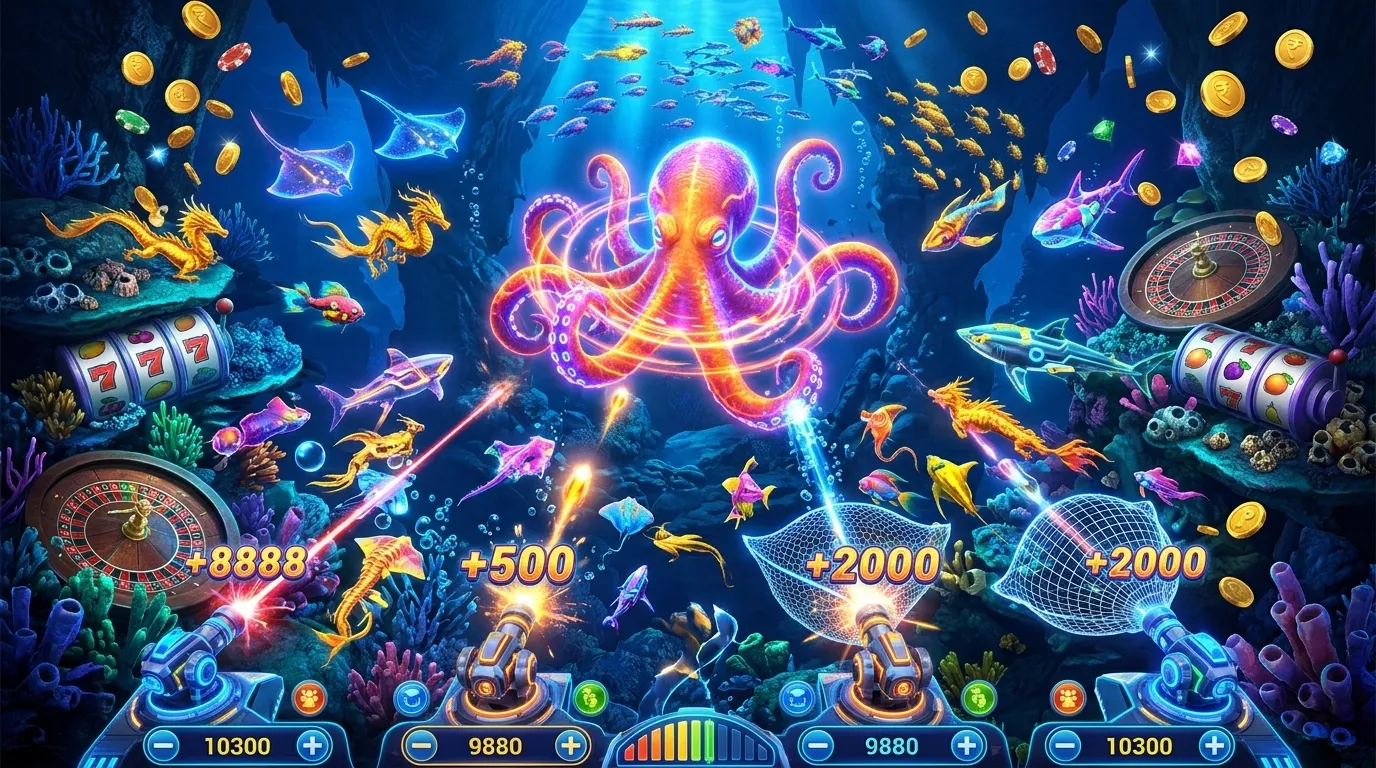
What are fishing arcade games, and why is everyone suddenly talking about them? If you’ve seen colourful fish swimming across a screen while players fire cannons at them, you’ve already met one.
At Teen Patti Stars, our readers mostly come from the card table. You know Teen Patti inside out. You can arrange a rummy hand faster than your chai cools down. But fishing games look like a different world altogether, yaar.
They look like a kids’ video game. Yet money is often involved, and the rules are not explained anywhere clearly. So players jump in, fire randomly, and wonder where their balance went.
In this guide, everything is explained in plain words. You will learn where these games came from, how a round works, how payouts are decided, and which myths to ignore. No heavy jargon. No “guaranteed win” tricks, because those don’t exist.
We’ve also added a section on Indian law. Please read it before you spend a single rupee. Chalo, let’s dive in.
What Are Fishing Arcade Games? The Simple Answer
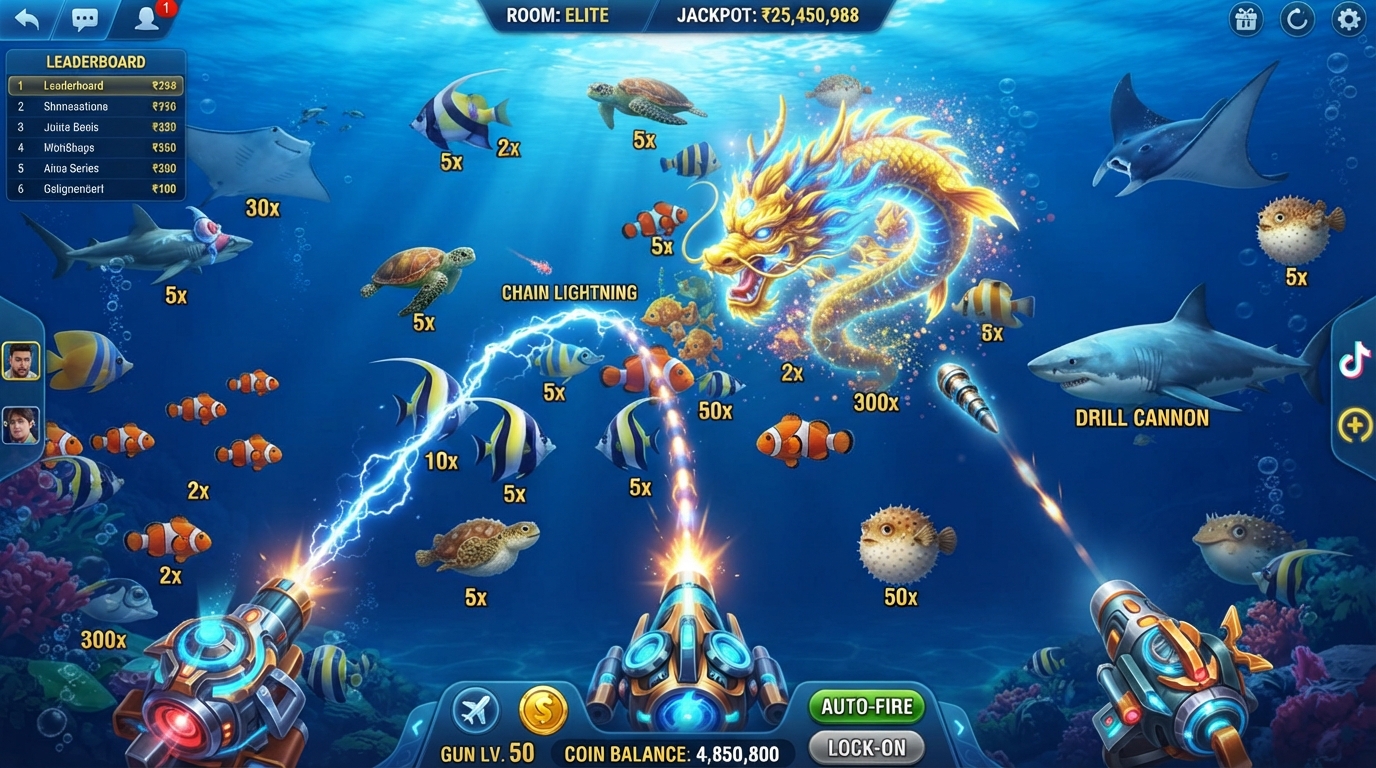
Fishing arcade games are shooting games with an underwater theme. You control a cannon at the edge of the screen. Fish of different sizes swim past. Each shot costs you credits, and each fish you catch pays a fixed multiple of your shot value.
That’s the whole idea. Small fish are easy to catch but pay little. Big fish and boss creatures are hard to catch but pay a lot. Your job is to decide where to aim and how much each shot should cost.
Where Did Fishing Games Come From?
Fishing games started as physical arcade cabinets in China and Taiwan, around the late 2000s. These were big table-shaped machines. Up to 8 players sat around one screen, each with their own cannon.
They became popular across Southeast Asia and later in the US, where they are often called “fish tables.” Online versions followed. Today, these games are made by studios such as JILI and Spadegaming and are played on mobile apps.
The online versions kept the same feel. Many still show other players’ cannons on the screen. Some of those are real players. On many apps, some are bots.
How a Round of a Fishing Game Works
Here is what happens in a typical online fishing game, step by step:
- You pick a room. Rooms are set by bet level, like a low-stake or high-stake table in Teen Patti.
- You set your cannon level. A higher level means each bullet costs more. It also means a bigger payout when you catch something.
- You aim and fire. You tap on a fish, or turn on auto-fire and lock-on to follow one target.
- The game decides if the fish is caught. Each hit has a chance of capturing the fish.
- You get paid. If caught, you win the fish’s multiplier times your bullet cost. A 20x fish hit with a ₹2 bullet pays ₹40.
The round never really “ends.” Fish keep coming in waves. A boss fish or special event usually appears every few minutes. You can leave whenever you like.
How Is a Catch Decided? (The Part Most Guides Skip)
This is where most players get it wrong. A catch is not decided by how many bullets a fish has taken. In most online fishing games, each hit is decided by a random number generator, or RNG.
Every fish has a capture chance linked to its payout. Roughly speaking, a bigger multiplier means a smaller chance per hit. The game is built so that the average return stays about the same, whatever you aim at.
Let’s take a simple example. Suppose a game returns 96% overall.
- A 2x fish might be caught on about 48% of hits.
- A 10x fish might be caught on about 9.6% of hits.
- A 100x fish might be caught on about 0.96% of hits.
In each case, ₹100 spent on bullets returns about ₹96 over a very long time. So no fish is a “smart” target. Only the swings are different. Small fish give steady, small wins. Big fish give long dry runs, then one big hit.
These numbers are only an illustration. Real games use their own maths, which is not always shown. But the principle is commonly applied across most licensed titles.
What Does RTP Mean in Fishing Games?
RTP stands for Return to Player. It shows the share of all bets a game pays back over millions of shots. Most fishing games claim an RTP between 93% and 97%.
Remember, RTP is measured over a huge number of shots by many players. It does not predict your session tonight. In 200 shots, you could be up or down by a lot.
In trusted games, RTP and randomness are checked by outside labs. Names like Gaming Laboratories International (GLI) and eCOGRA are often seen. If a fishing app shows no testing details at all, be careful.
Types of Fish and Targets You Will See
Every fishing game has its own designs, but most follow a similar order. Here is a rough guide to what you’ll find swimming across the screen.
|
|
|
|
|
|
|
|
|
|
|
|
|
|
|
|
|
|
|
|
|
|
|
|
|
|
|
|
|
|
These ranges change from game to game. Always check the game’s paytable, usually shown behind an info or “i” button. It lists every fish and its exact multiplier.
Weapons and Special Features Explained
Most fishing games add special weapons and events. Here is what each one does, in plain words.
- Cannon levels: You can raise or lower your bullet cost anytime. This is your bet size.
- Auto-fire: The cannon keeps shooting without you tapping. Handy, but it burns credits very fast.
- Lock-on: Your bullets follow one chosen fish. Useful for big targets moving around the screen.
- Laser or drill cannon: A free special weapon that hits many fish in a line. It is usually won by catching a special fish.
- Bomb fish: When caught, it explodes and catches nearby fish too.
- Chain lightning: Catches several fish of the same type at once.
- Bonus wheels and boss events: A short event with bigger multipliers, often after a boss is caught.
One quick warning on auto-fire. At 5 shots a second and ₹2 a shot, you spend ₹600 a minute. Many players don’t notice this until their balance is gone. Keep an eye on it.
Want to compare how fishing games and other arcade titles are offered on different platforms? Find out more about the games on our partner site.
Common Myths About Fishing Arcade Games
Lots of “pro tips” about fishing games float around on YouTube, WhatsApp and Telegram groups. Most of them fall apart once you understand the maths. Let’s clear the big ones.
Myth 1: “Keep Shooting the Same Big Fish, It’s Almost Dead”
This is the most common one. In most online fishing games, each hit is a fresh roll of the dice. A shark you’ve hit 50 times is not “weaker” than a fresh one. Following a big fish too long is a classic way to burn your balance.
Myth 2: “Let Others Damage It, Then Steal the Kill”
Since there is no real “damage” in most online versions, there is nothing to steal. Your next bullet has the same chance as anyone else’s. Waiting for others to “soften” a fish gives you no edge.
Myth 3: “Small Fish Are Safer Money”
Small fish give steadier wins. But as shown earlier, the average return is about the same across all fish. Small fish only reduce the swings. They don’t increase your profit.
Myth 4: “Higher Cannon Levels Have Better Catch Rates”
In most games, the catch chance stays the same at every cannon level. A higher level only increases your cost and your payout equally. Bigger bets don’t make the game easier.
Myth 5: “Some Rooms or Times Pay Better”
The RNG works the same at any hour and in any room. Rooms only change the bet range. If a room seems “hot,” that’s normal luck playing out.
Fishing Games vs Teen Patti and Rummy
If you love cards, this comparison helps you see what changes. It also helps explain what fishing arcade games really are, in terms you already know.
|
|
|
|
|
|
|
|
|
|
|
|
|
|
|
|
|
|
|
|
|
|
|
|
|
|
|
|
|
|
The big difference is speed. In Teen Patti, you decide a few times a round. In a fishing game, money leaves your balance with every single shot. So a ₹500 budget can disappear in minutes.
Your card-reading skills also don’t help here. Aiming well feels like skill, and that feeling keeps people playing. But the result of each hit is still decided by chance. Treat fishing games as entertainment, not as a way to earn.
Are Fishing Arcade Games Legal in India?
This is the most important part of the post. Please read it fully before playing anything for real money.
For many years, gambling in India was mainly governed by the Public Gambling Act, 1867. Betting and gambling are state subjects under the Constitution. So each state set its own rules, and they varied a lot.
In August 2025, Parliament passed the Promotion and Regulation of Online Gaming Act, 2025. This law bans “online money games” across India. Any game played by depositing money in the hope of winning money is covered. That includes real-cash fishing games, slots, rummy and poker. Ads and payment processing for such games are banned too. Official updates are shared on the Ministry of Electronics and IT website.
The law has been challenged in the Supreme Court, and its rules were still being worked out. The position may have changed since this post was written. So check the latest status before you deposit anything. If you are unsure, speak to a lawyer.
Free-to-play games, with no real money in or out, are treated differently. Playing a fishing game with free credits is the safest way to learn how it works.
How to Play Fishing Games the Smart Way
Whether you play free versions or anywhere real money is allowed, these habits help. They sound basic, but most players skip them.
- Fix a budget before you start. Treat it like money spent on a movie or a match ticket. Once it’s gone, you’re done for the day.
- Set a timer. Fishing games have no natural end. Without an alarm, “bas paanch minute aur” can turn into two hours.
- Keep auto-fire off at first. Fire manually until you understand how fast credits are spent.
- Start at the lowest cannon level. Learn the game cheaply. Raise it only if you understand the swings.
- Read the paytable. Know every fish’s multiplier and what the special fish do.
- Check the RTP and testing details. Prefer games that show both clearly.
- Don’t chase one big fish. Set a limit, like 30 shots, then move on.
- Never chase losses. Increasing bets to “win it back” is how small losses become big ones.
When Fun Stops Being Fun
Fishing games are fast and flashy, so it’s easy to lose track. Watch for warning signs. You hide your playing from family. You borrow money to play. You feel restless or angry when you can’t play.
If this sounds familiar, please talk to someone. India’s free government mental health helpline, Tele-MANAS, can be reached at 14416. Support is given in many Indian languages. Reaching out is a strong step, not a weak one.
FAQs: What Are Fishing Arcade Games?
1. What are fishing arcade games in simple words?
Fishing arcade games are underwater shooting games. You fire a cannon at fish swimming across the screen. Each shot costs credits, and each fish caught pays a set multiplier. At Teen Patti Stars, we describe them as “arcade shooting meets a paytable.”
2. How do you win in a fishing arcade game?
You win when a fish you hit is captured. The payout equals the fish’s multiplier times your bullet cost. A 30x fish hit with a ₹1 bullet pays ₹30. Teen Patti Stars suggests checking the paytable first, since multipliers vary by game.
3. Are fishing games based on skill or luck?
Mostly luck. You choose where to aim and how much to bet. But whether a hit catches the fish is decided by an RNG. Teen Patti Stars reminds card players that, unlike rummy, aiming skill barely changes long-term results.
4. Which fish should I target to win more?
No fish is a “better” target over time. Bigger fish pay more but are caught less often, so the average return stays similar. Small fish only give steadier wins. Teen Patti Stars recommends choosing targets based on your budget, not on “pro tips.”
5. Does a big fish get weaker after many hits?
In most online fishing games, no. Each hit has its own fresh chance of a catch. A heavily hit fish is not closer to capture. Teen Patti Stars sees this myth cost players more money than any other.
6. What is RTP in fishing games?
RTP (Return to Player) is the share of total bets paid back over millions of shots. Most fishing games claim 93% to 97%. It does not predict one session. Teen Patti Stars advises picking games that show their RTP and testing details clearly.
7. Are real-money fishing games legal in India?
The Promotion and Regulation of Online Gaming Act, 2025 bans online money games across India, including real-cash fishing games. The law has been challenged in court, so check the latest position. Teen Patti Stars suggests consulting a lawyer if unsure and sticking to free play meanwhile.
8. What do bomb fish and laser cannons do?
Bomb fish explode when caught and capture nearby fish as well. Laser or drill cannons are free special weapons that hit many fish in a line. Teen Patti Stars notes these features differ by game, so read each game’s info screen.
9. Why does my balance drop so fast in fishing games?
Every shot costs money, and auto-fire can shoot several times a second. At ₹2 a shot, that can mean ₹600 a minute. Teen Patti Stars recommends turning auto-fire off and starting at the lowest cannon level.
10. How can beginners learn fishing games without losing money?
Play a free or demo version first. You can learn the paytable, special weapons and pace of spending with virtual credits. Set a budget and timer even then. Teen Patti Stars always suggests this step before anything else.
Final Words: Now You Know What Fishing Arcade Games Are
So, what are fishing arcade games? Bas itna yaad rakho: you pay for every shot, an RNG decides every catch, and the paytable decides every payout. Bigger fish pay more but are caught less often. Nothing about the game is as simple as “just aim better.”
With this knowledge, you are already ahead of most players. You won’t chase a “nearly dead” shark. You won’t leave auto-fire running blind. And you will know where to find the paytable and RTP before you fire.
What next? Try a free version first, keep a budget and a timer ready, and check the law where you live. Curious card players can see what the app has to offer — Download Now to explore the games and start with free modes. Where real-money play is allowed for you, tap Play Now only after your limits are set.
Looking for more easy guides on Teen Patti, rummy and arcade games? Head over to our Blogs section. Got a question this post didn’t answer? Reach our team through Contact Us. Every message is read.
Play smart, stay within your limits, and enjoy the game for what it is: entertainment.
Related Posts