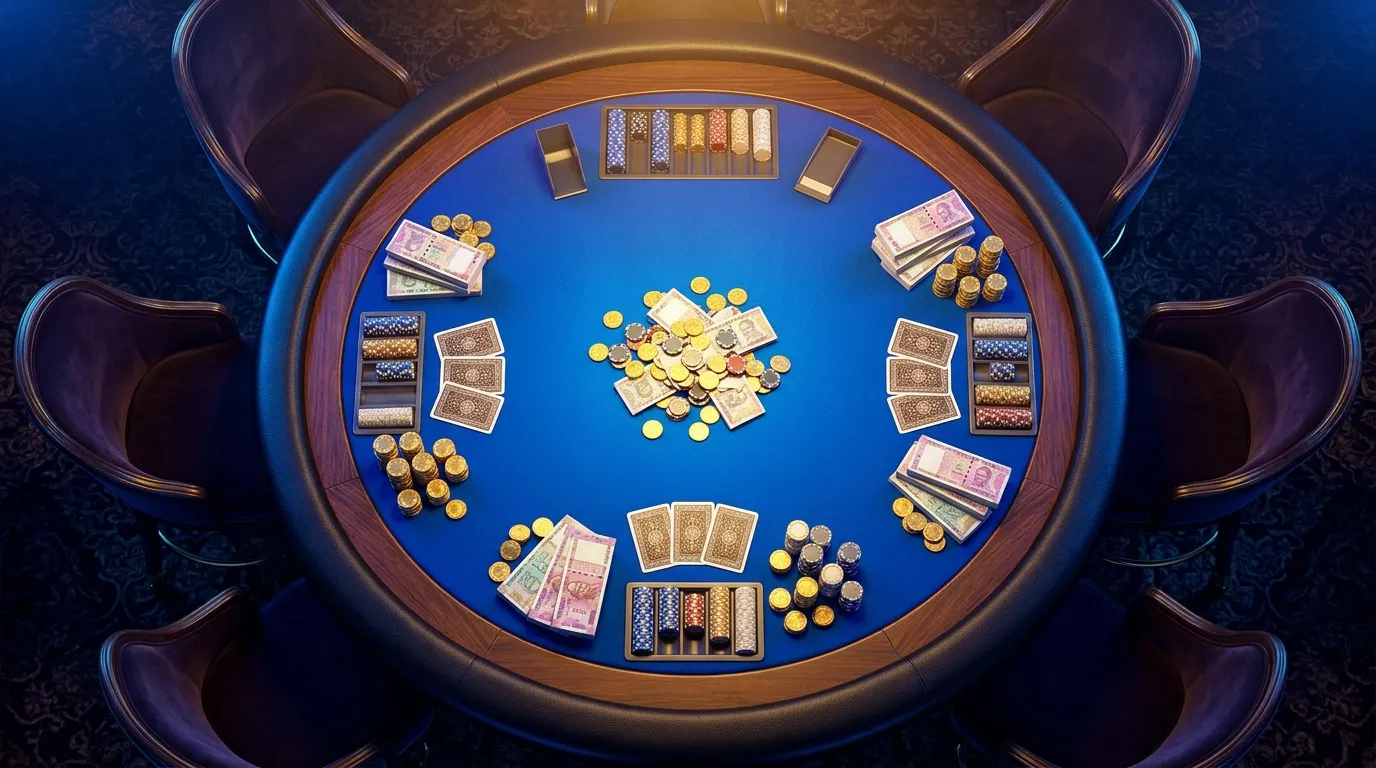
Andar Bahar: Game Overview, Rules, and Beginner Guide
Andar Bahar is a traditional Indian card game recognized for its straightforward rules, two main betting options, and fast-moving rounds. Unlike many casino card games that require players to compare several combinations or make repeated decisions, Andar Bahar revolves around one central objective: predicting which of two sides will receive a card matching the rank of a designated reference card.
The game is commonly associated with Indian card-playing traditions and has also been adapted for online casino platforms, live dealer environments, and mobile gaming applications. Its digital versions generally retain the original card-matching concept while introducing touchscreen interfaces, automated result processing, and optional betting features.
Although Andar Bahar is relatively easy to understand, beginners should recognize that the game involves chance rather than a reliable method of predicting future card outcomes. The rules determine how cards are distributed and how winning selections are identified, but they do not guarantee that any particular side will win.
One important feature of Andar Bahar is that the two betting sides may not have identical probabilities or payout rates. The side receiving the first card has a small mathematical advantage because it gets the first opportunity to produce the matching rank. Many game versions account for this difference through their payout structures.
Online variations may also introduce additional side wagers, predictions about the number of cards dealt, or special multiplier features. These options can make the interface more complex, so understanding the basic rules remains essential before interpreting optional features.
This beginner guide explains the Andar Bahar game structure, card-matching rules, betting options, payout examples, probability concepts, common variations, and responsible participation practices. The purpose is to provide a clear understanding of how the game operates without presenting gambling as a dependable source of income.
What Is Andar Bahar?
Andar Bahar is a card game in which participants predict whether a card matching the rank of a reference card will first appear in the Andar or Bahar pile.
The game generally uses one standard 52-card deck without printed jokers.
At the beginning of a round, a reference card is revealed. The dealer then distributes cards alternately between two sides until another card with the same rank appears.
The side receiving that matching card wins the main round.
Main Features of Andar Bahar
- Standard Deck: The traditional format generally uses 52 playing cards.
- Reference Card: One card establishes the rank that subsequent cards must match.
- Andar: One of the two main betting sides.
- Bahar: The other main betting side.
- Alternating Deal: Cards are distributed between the two sides in alternating order.
- Rank Matching: The first card matching the reference card's rank determines the winning side.
- Single Main Decision: The primary wager involves selecting Andar or Bahar.
- Variable Payouts: Payouts may differ depending on which side receives the first card.
- Optional Side Bets: Some versions include additional predictions and payout conditions.
- Random Outcomes: Card distribution determines the result, and no side is guaranteed to win.
The exact dealing order, payout schedule, and additional features depend on the selected Andar Bahar variant.
For an introduction to related Indian card games, review the beginner's guide to Teen Patti rules and gameplay.
1. Understanding the Basic Objective of Andar Bahar
The main objective of Andar Bahar is to identify which side will receive the first card matching the rank of the reference card.
This differs from card games that require forming combinations, comparing hand values, or defeating other participants.
Two Main Sides
The game uses two areas identified as Andar and Bahar.
These represent the available choices for the main wager.
The Reference Card
One card is revealed before the alternating deal begins.
Its rank becomes the target for the remainder of the round.
Matching the Rank
The first subsequently dealt card with the same rank determines the result.
Suits Do Not Need to Match
If the reference card is a seven of hearts, any remaining seven can complete the match.
The First Match Ends the Round
Once the matching rank appears, no additional cards are needed to determine the main result.
One Main Prediction
In the conventional game, the participant chooses the side expected to receive the matching card.
Chance Determines the Outcome
Understanding the objective helps players interpret results, but it does not make the next matching card predictable.
2. The Cards and Equipment Used in Andar Bahar
Andar Bahar generally uses familiar playing cards and a simple table layout.
The physical and digital versions may differ visually while following the same underlying matching concept.
Standard 52-Card Deck
The traditional game uses 13 ranks across four suits.
Card Ranks
The ranks are ace, two through ten, jack, queen, and king.
Four Suits
The suits are hearts, diamonds, clubs, and spades.
Reference Card Area
A designated location displays the card whose rank must be matched.
Andar Area
One pile receives cards during the alternating distribution.
Bahar Area
The other pile receives the intervening cards.
Betting Areas
Casino-style versions may display separate areas for main wagers and optional side bets.
Digital Interfaces
Online versions reproduce these elements through software and graphical controls.
Game-Specific Layouts
The physical positions of Andar and Bahar may differ between providers.
Players should use the labels and rules rather than relying exclusively on which side appears on the left or right.
3. What Is the Joker or House Card in Andar Bahar?
In Andar Bahar, the initial reference card is sometimes called the Joker, house card, or Hukum card.
This terminology can confuse beginners because the card is not normally a printed joker from a standard deck.
An Ordinary Playing Card
The reference card is generally selected from the regular 52-card deck.
Its Rank Matters
The game uses the card's rank to determine which later card creates a match.
Example Reference Card
Suppose the reference card is the king of hearts.
The remaining kings of diamonds, clubs, and spades can produce the matching result.
Three Matching Cards Remain
After one ordinary reference card is removed from a complete deck, three other cards of the same rank remain.
Suit Matching Is Unnecessary
The matching card does not need to share the reference card's suit.
Reference Card Color
Some game variations use the color of the reference card to determine which side receives the first dealt card.
Different Terminology
The terms Joker, house card, and reference card may describe the same function in different game interfaces.
Understanding the Official Rules
Players should verify how the selected application defines its reference card and dealing sequence.
4. How an Andar Bahar Round Works Step by Step
The conventional Andar Bahar game uses a straightforward sequence.
Step 1: Begin a New Round
A new round starts with the preparation of the cards and betting interface.
Step 2: Reveal the Reference Card
One card is selected to establish the rank that must be matched.
Step 3: Identify the Betting Sides
The two main options are Andar and Bahar.
Step 4: Select a Side
Participants choose the side they believe will receive the first matching card.
Step 5: Close the Betting Period
In casino-style versions, eligible wagers must be finalized before the dealing phase begins.
Step 6: Deal the First Card
The dealer places the first card on the side specified by the selected variant's rules.
Step 7: Alternate Between Sides
Subsequent cards are dealt to the other side and then back again.
Step 8: Check Each Card's Rank
The game compares each new card with the rank of the reference card.
Step 9: Identify the First Match
When a matching rank appears, the side receiving that card becomes the winner.
Step 10: Settle the Result
Main wagers and any available side bets are evaluated according to their published rules.
Once settlement is complete, the next round may begin.
5. Understanding the Andar and Bahar Betting Options
The main betting system involves selecting one of two possible sides.
These selections represent the location where the participant expects the matching card to appear first.
Andar Selection
An Andar wager wins when the first card matching the reference rank is dealt to the Andar pile.
Bahar Selection
A Bahar wager wins when the first matching card is dealt to the Bahar pile.
Mutually Exclusive Results
In the standard main game, only one of the two sides receives the first matching card.
Betting Closure
Casino versions generally stop accepting main wagers before dealing continues.
Side-Specific Payouts
The payout for a winning selection may depend on which side receives the first card.
Different Provider Rules
Some versions always begin dealing on Andar, while others use the reference card's color to determine the starting side.
Understanding Both Choices
Players should not assume the two options have identical payout structures.
No Certain Selection
Neither side is guaranteed to receive the next matching card.
6. Why the First Card Matters in Andar Bahar
The side receiving the first card has a small mathematical advantage in the conventional alternating-deal format.
This is because the first side receives the first opportunity to match the reference card's rank.
Alternating Distribution
Cards are dealt in a sequence that alternates between the two sides.
Odd-Numbered Cards
The side dealt first receives the first, third, fifth, and other odd-numbered cards.
Even-Numbered Cards
The second side receives the second, fourth, sixth, and other even-numbered cards.
Matching Opportunities
The first-dealt side can win immediately if the first card matches the reference rank.
Probability Difference
In a standard single-deck model, the first-dealt side wins approximately 51.5% of rounds.
Second-Side Probability
The second-dealt side wins approximately 48.5% of rounds.
Payout Adjustments
Many casino-style versions use different payout rates to account for this mathematical difference.
No Guaranteed Advantage
A slightly higher probability does not mean the first-dealt side will win a particular round.
7. The Different Dealing Orders Used in Andar Bahar
Andar Bahar games may use different rules to determine where dealing begins.
These variations can affect how the betting options should be interpreted.
Always Dealing to Andar First
Some versions place the first card on Andar and the next card on Bahar.
Color-Based Dealing
Other versions use the color of the reference card.
Black Reference Card
Under one common color-based rule, a black reference card means Andar receives the first card.
Red Reference Card
Under the same rule, a red reference card means Bahar receives the first card.
Alternative Provider Rules
Some implementations use different dealing conventions.
Why This Matters
The first-dealt side generally has a slightly greater probability of receiving the first matching card.
Checking the Game Interface
Players should review the official dealing rules before interpreting betting probabilities or payout information.
Do Not Assume Universal Rules
A rule observed in one application should not automatically be applied to every other Andar Bahar version.
8. How Andar Bahar Payouts Are Calculated
Winning payouts depend on the game's published paytable.
In many conventional casino-style versions, the side receiving the first card offers a lower net payout than the side receiving the second card.
First-Dealt Side Payout
A commonly used payout is 0.9:1 for a successful wager on the first-dealt side.
Second-Dealt Side Payout
A commonly used payout is 1:1 for a successful wager on the second-dealt side.
Illustrative First-Side Example
Suppose a hypothetical wager of $10 wins at 0.9:1.
The net winnings would be $9.
Including the original wager, the total return would be $19.
Illustrative Second-Side Example
Suppose a $10 wager wins at 1:1.
The net winnings would be $10.
Including the original wager, the total return would be $20.
Net Winnings Versus Total Return
Net winnings represent the amount gained beyond the original stake.
Total return includes both the original stake and the winnings.
Different Game Variants
Some versions use alternative payout rates, additional betting stages, or special settlement conditions.
Separate Side Bets
Optional wagers can have payout structures unrelated to the two main selections.
Always Read the Paytable
These examples explain a common payout structure rather than guaranteeing the terms of a particular platform.
9. Understanding Andar Bahar Probability
Probability describes how likely particular outcomes are under a defined mathematical model.
In Andar Bahar, the alternating dealing sequence creates a small difference between the first-dealt and second-dealt sides.
Single-Deck Model
After the reference card is revealed, 51 cards remain in a standard deck.
Matching Cards
Three of those remaining cards share the reference card's rank.
Winning the Main Round
The first of these matching cards to appear determines the winning side.
First-Dealt Side
The first-dealt side wins approximately 51.5% of rounds under the conventional model.
Second-Dealt Side
The second-dealt side wins approximately 48.5% of rounds.
Why the Probabilities Are Not Equal
The difference arises from the alternating sequence and the first opportunity to receive a matching card.
Probability Is Not Prediction
Knowing the theoretical distribution does not reveal which side will win the next individual round.
Short-Term Variation
Actual results across a small number of rounds may differ considerably from the expected proportions.
Game-Specific Modifications
Side-bet rules, dealing differences, or other variations may require separate probability calculations.
10. House Edge in Andar Bahar
House edge represents the operator's theoretical mathematical advantage under a game's particular payout rules.
It is determined by both the probability of an outcome and the amount paid when that outcome occurs.
Relationship Between Payout and Probability
A side that wins more frequently may offer a lower payout.
Common First-Side Payout
With a 0.9:1 net payout and an approximately 51.5% winning probability, the theoretical house edge is approximately 2.15%.
Common Second-Side Payout
With a 1:1 net payout and an approximately 48.5% winning probability, the theoretical house edge is approximately 3.00%.
Expected Value
Expected value combines the possible outcomes with their probabilities and payout amounts.
Illustrative Interpretation
A theoretical house edge of 3% corresponds to an expected loss of $3 for every $100 wagered over sufficiently extensive play under the specified model.
Individual Outcomes
This does not mean every person wagering $100 will lose exactly $3.
Different Paytables
Alternative payout schedules produce different theoretical house edges.
No Risk-Free Side
A lower theoretical house edge does not eliminate the possibility of losing.
For additional explanation, read understanding house edge in casino games.
11. Optional Side Bets in Andar Bahar
Some online Andar Bahar variations include betting options beyond choosing the winning side.
These features use separate qualification conditions and payout tables.
Card-Count Predictions
Some games allow predictions about how many cards will be dealt before the first matching rank appears.
Grouped Card Ranges
A side-bet interface may group possible results into ranges, such as the first five cards or another defined interval.
Reference Card Predictions
Some variations include optional predictions related to the reference card's rank, suit, or color.
Multiplier Features
Certain digital versions attach additional multipliers to designated results.
Separate Settlement
Side bets may be evaluated independently of the Andar or Bahar main wager.
Different Probabilities
Each additional wager has its own mathematical characteristics.
Additional Financial Exposure
Placing side bets increases the total amount wagered during a round.
Understanding Restrictions
Not every provider offers the same optional features.
Read the Exact Rules
Players should review the relevant side-bet paytable rather than assuming a particular feature uses standard payouts.
12. Andar Bahar Versus Teen Patti
Andar Bahar and Teen Patti are both associated with Indian card gaming, but their rules and objectives differ significantly.
Number of Cards
Andar Bahar uses a reference card and alternating card distribution.
Traditional Teen Patti generally gives each participant a three-card hand.
Main Objective
Andar Bahar asks participants to identify the side where the first matching rank appears.
Teen Patti involves evaluating and comparing card combinations.
Hand Rankings
Teen Patti uses categories such as trail, pure sequence, sequence, color, pair, and high card.
Andar Bahar does not use these combinations to determine its main outcome.
Player Decisions
Traditional Teen Patti can involve several betting decisions depending on the version.
The conventional Andar Bahar main game involves one side selection before the alternating deal.
Mathematical Structure
The games use different probability and outcome models.
Round Duration
Andar Bahar rounds are often relatively short, although timing varies by provider.
Digital Adaptations
Both games may be offered through mobile or browser-based applications.
Important Distinction
Understanding one game does not automatically provide complete knowledge of the other.
For more information, explore Teen Patti rules explained for beginners.
13. Andar Bahar Versus Baccarat and Other Casino Games
Andar Bahar is sometimes compared with baccarat because both games commonly present two prominent betting options.
However, their outcome-generation rules are different.
Andar Bahar
The outcome depends on which side receives the first card matching the reference rank.
Baccarat
The standard game compares the final totals of Player and Banker hands using defined card-value and drawing rules.
Blackjack
Blackjack involves hand-value decisions centered around reaching a total closer to 21 than the dealer without exceeding it.
Roulette
Roulette outcomes depend on the numbered pocket where the ball settles.
Slot Games
Slots evaluate symbol arrangements according to the game's payout conditions.
Different Decision Structures
Some casino games involve repeated player decisions, while Andar Bahar's conventional main game uses a single side prediction.
Different Mathematical Advantages
Each game has its own rules and theoretical payout structure.
Understanding the Selected Game
Players should review individual game rules instead of assuming that casino games with similar interfaces operate in the same way.
For broader context, review the beginner's guide to popular casino game categories.
14. Live Dealer Andar Bahar Versus Digital Versions
Andar Bahar can be presented through live dealer systems or software-based environments.
The central matching concept is similar, but the technical presentation differs.
Live Dealer Games
Live dealer versions use streamed footage of a human dealer handling physical cards.
Software-Based Versions
Digital games may use software to generate card sequences and process results.
Visual Presentation
Live interfaces show physical dealing, while software versions display animated or digitally rendered cards.
Round Timing
Live sessions usually follow the pace of the dealer and the platform's betting window.
Network Requirements
Live streaming may require more consistent bandwidth than simpler digital interfaces.
Game Rules
Different versions may use different dealing conventions, payout schedules, or optional wagers.
Fairness Evaluation
Live and software-based games require appropriate controls for their respective outcome processes.
No Guaranteed Format Advantage
The presence of a human dealer does not guarantee better financial results.
For more information, see the differences between RNG casino games and live dealer games.
15. Understanding Randomness and Card Shuffling
Randomness is an essential concept in Andar Bahar because the ordering of the deck determines where the first matching card appears.
Physical Shuffling
Live dealer games generally use physical card-handling procedures.
Software-Based Shuffling
Digital versions may use random number generation or other software methods to determine card order.
Card Distribution
The order of the remaining cards determines when a matching rank appears.
Independent Rounds
When a deck is freshly shuffled independently for each round, previous outcomes do not determine the next result.
Apparent Streaks
Several consecutive Andar or Bahar results can occur through randomness.
Gambler's Fallacy
The gambler's fallacy is the mistaken belief that past independent outcomes make an opposite result due.
Randomness Versus Fairness
Randomization alone does not prove that software is correctly implemented or independently tested.
Testing and Verification
Where applicable, independent testing may assess the integrity of the game system.
For additional background, read casino game fairness and independent testing explained.
16. Playing Andar Bahar on Mobile Devices
Mobile-compatible versions of Andar Bahar allow supported users to interact with the game through smartphones or tablets.
The interface may differ from a physical table or desktop environment.
Touchscreen Controls
Mobile applications may provide separate controls for Andar, Bahar, and optional wagers.
Reference Card Display
The reference card is usually shown prominently within the interface.
Card Dealing Animation
Digital versions may animate the alternating distribution of cards.
Betting Timers
Some games display the remaining time before wagering closes.
Result History
Certain interfaces show previous round results for reference.
Network Connectivity
Online games may require a stable internet connection to process account activity and update results.
Application Compatibility
Supported operating system versions and device performance can affect usability.
Official Downloads
Users should access gaming software through legitimate publisher-approved channels.
Account Security
Strong passwords and supported additional authentication methods can help protect account access.
For related guidance, review mobile casino games on smartphones explained.
17. Learning Andar Bahar Through Demo Games
Some platforms provide practice versions using virtual credits without monetary value.
These modes can help beginners understand the game's structure without risking money.
Learning the Layout
Demo interfaces may help users locate the Andar and Bahar selections.
Recognizing the Reference Card
Players can observe how the initial card establishes the matching rank.
Following the Dealing Order
Practice rounds demonstrate how cards alternate between the two sides.
Understanding Results
Users can observe when the first matching card ends the round.
Reading Payouts
Some demo games display illustrative or game-specific payout information.
Exploring Side Bets
When supported, practice versions may explain optional predictions.
Demo Limitations
Practice modes may not include every feature or financial condition of a separate real-money version.
No Predictive Benefit
Success in a demo game does not establish that similar results will occur during later rounds.
For additional information, see why free-play casino games can be useful for beginners.
18. Common Beginner Mistakes in Andar Bahar
Despite the game's simple objective, several misunderstandings can lead to unrealistic expectations.
Assuming the Two Sides Are Exactly Equal
The first-dealt side has a slightly higher theoretical probability of receiving the matching card.
Ignoring the Dealing Order
Different versions may begin on different sides.
Confusing Rank With Suit
The main result depends on matching the reference card's rank, not its suit.
Misunderstanding the Joker
The reference card is generally an ordinary playing card rather than a separate printed joker.
Ignoring Payout Differences
A side with a slightly higher winning probability may provide a lower payout.
Assuming Streaks Predict Outcomes
Previous independently generated results do not establish which side will win next.
Misreading Total Returns
Original stakes and net winnings should be distinguished when interpreting payouts.
Overlooking Side-Bet Costs
Optional wagers increase the total amount exposed to financial risk.
Relying on Guaranteed-Win Claims
Claims that card patterns or special systems guarantee results should be treated critically.
Ignoring Time and Spending Limits
Short rounds may make repeated participation easier, which can increase cumulative expenditure.
19. Legal Eligibility, Security, and Responsible Gaming
Real-money Andar Bahar services may be subject to significant legal, financial, and security requirements.
Users should verify these conditions before considering monetary participation.
Minimum Age
Real-money gambling is subject to age restrictions established by applicable laws.
Regional Rules
The legal status of online casino-style card games varies by jurisdiction.
Operator Authorization
Access to a website or application does not establish that it is legally authorized to offer gambling in a particular location.
Identity Verification
Regulated services may require account verification under applicable rules.
Secure Applications
Users should verify the publisher and avoid suspicious modified software.
Account Protection
Use strong unique passwords and supported multifactor authentication.
Payment Security
Review transaction details and use legitimate payment channels when applicable.
Entertainment Budgets
Any permitted monetary gambling should remain within discretionary funds that can be lost without affecting essential expenses.
Avoid Chasing Losses
Increasing wagers to recover previous losses can create additional financial harm.
Taking Breaks
Players should avoid extended sessions that interfere with work, rest, or personal responsibilities.
Responsible Gaming Tools
Where available, deposit limits, cooling-off periods, session limits, and self-exclusion can help manage participation.
Recognizing Harm
Borrowing money to gamble, hiding losses, or feeling unable to stop may indicate a need for additional support.
For broader guidance, read responsible online casino gaming safety tips for beginners.
20. A Step-by-Step Beginner Guide to Understanding Andar Bahar
Beginners can learn the game systematically by focusing on its rules, probability structure, and limitations.
Step 1: Identify the Game Variant
Confirm whether the selected version uses conventional or modified dealing rules.
Step 2: Learn the Reference Card
Understand that the initial card establishes the rank that must be matched.
Step 3: Identify Both Sides
Recognize the Andar and Bahar areas.
Step 4: Understand the Dealing Order
Check which side receives the first card.
Step 5: Learn the Matching Rule
The first card matching the reference rank determines the winning side.
Step 6: Review the Main Betting Options
Understand what an Andar or Bahar selection represents.
Step 7: Read the Paytable
Confirm the payout rate for each side.
Step 8: Understand Probability Differences
Recognize the small mathematical advantage associated with the first-dealt side.
Step 9: Learn About House Edge
Understand the relationship between winning probabilities, payout rates, and expected financial results.
Step 10: Review Optional Side Bets
Identify whether additional predictions are offered and how they are settled.
Step 11: Explore Demo Modes
Use nonmonetary practice features where available to understand the interface.
Step 12: Verify Legal Eligibility
Check age, location, and relevant operator authorization before considering real-money activity.
Step 13: Establish Financial Limits
Use an affordable entertainment budget and avoid unnecessary monetary exposure.
Step 14: Protect Account Information
Access legitimate software and keep authentication details confidential.
Step 15: Maintain Realistic Expectations
Do not assume previous results, card streaks, or prediction systems guarantee future outcomes.
A Practical Andar Bahar Beginner Checklist
Use the following checklist when learning about Andar Bahar or evaluating a particular game version.
- Understand the basic objective of Andar Bahar.
- Confirm that the game uses the expected deck format.
- Identify the reference card or Joker.
- Remember that the reference card is generally an ordinary playing card.
- Understand that matching the rank determines the main result.
- Recognize that matching the suit is unnecessary.
- Identify the Andar and Bahar areas.
- Check which side receives the first card.
- Understand the alternating dealing sequence.
- Know that the first matching card ends the main round.
- Review the available betting options.
- Check the payout rate for each main side.
- Distinguish net winnings from the total returned amount.
- Understand the first-dealt side's slight probability advantage.
- Recognize that a higher probability does not guarantee a win.
- Learn the meaning of house edge.
- Check whether optional side bets are available.
- Read the rules for card-count predictions or multipliers.
- Understand that side bets increase financial exposure.
- Review fairness and testing information where available.
- Do not assume past results predict future independent rounds.
- Use demo modes where available.
- Verify the gaming application's legitimacy.
- Confirm age and geographic eligibility.
- Review relevant operator authorization.
- Protect account passwords and verification codes.
- Understand payment and withdrawal restrictions where applicable.
- Maintain an affordable entertainment budget.
- Avoid chasing losses or increasing wagers to recover money.
- Take breaks and stop when participation creates harm.
Andar Bahar is a traditional card game built around a clear objective: predicting whether the first card matching a reference rank will appear on the Andar or Bahar side. Its alternating dealing structure makes the basic rules relatively accessible, although different versions may use different dealing conventions and payout schedules.
Understanding the reference card, rank matching, first-card advantage, and house edge helps explain how the game produces and settles outcomes. Optional side bets and digital features may introduce additional complexity, but they do not eliminate the uncertainty associated with card distribution.
By reviewing official rules, using nonmonetary learning options where available, verifying legal eligibility, and maintaining responsible financial boundaries, beginners can understand Andar Bahar without relying on misleading claims about predictable results or guaranteed winnings.
Frequently Asked Questions
What is Andar Bahar?
Andar Bahar is a traditional Indian card game in which participants predict whether a card matching the rank of a reference card will first appear in the Andar or Bahar pile.
How many cards are used in Andar Bahar?
The conventional game generally uses one standard 52-card deck without printed jokers.
What is the main objective of Andar Bahar?
The objective is to identify which of the two sides receives the first card matching the reference card's rank.
What does Andar mean?
Andar means inside and identifies one of the two main sides used in the game.
What does Bahar mean?
Bahar means outside and identifies the other main side.
What is the Joker card in Andar Bahar?
The Joker is the initial reference card used to establish the rank that subsequent cards must match. It is generally an ordinary card from the deck rather than a printed joker.
Does the matching card need the same suit?
No. The main game requires the matching card to share the reference card's rank. Its suit does not need to match.
How does an Andar Bahar round begin?
A reference card is revealed, eligible wagers are finalized, and cards are then distributed alternately between the two sides according to the selected variant's rules.
How does an Andar Bahar round end?
The main round ends when the first card matching the reference rank appears on either Andar or Bahar.
Which side receives the first card?
The dealing order varies. Some versions always begin with Andar, while others determine the starting side from the reference card's color or use another defined rule.
Why does the first-dealt side have an advantage?
The first-dealt side receives the first opportunity to produce a matching card. Under the conventional single-deck model, it wins slightly more often than the second-dealt side.
What is the probability of the first-dealt side winning?
Under standard single-deck rules, the first-dealt side wins approximately 51.5% of rounds.
What is the probability of the second-dealt side winning?
Under the same model, the second-dealt side wins approximately 48.5% of rounds.
Are Andar and Bahar equally likely to win?
Not within a round when the starting side is known. The first-dealt side has a small probability advantage. However, the named sides may have equal overall chances across rounds in variants that alternate the starting side according to the reference card's color.
What is a common Andar Bahar payout?
One common payout structure provides 0.9:1 net winnings on the first-dealt side and 1:1 on the second-dealt side. Actual payouts depend on the selected game.
What does a 0.9:1 payout mean?
A winning $10 wager at 0.9:1 produces $9 in net winnings, plus the return of the original $10 stake, for a total return of $19.
What does a 1:1 payout mean?
A winning $10 wager at 1:1 produces $10 in net winnings plus the original $10 stake, for a total return of $20.
What is the house edge in Andar Bahar?
Under a common standard payout model, the theoretical house edge is approximately 2.15% for the first-dealt side and 3.00% for the second-dealt side. Different payout structures can change these values.
Can Andar Bahar results be predicted from previous rounds?
Not in a properly functioning game with independently shuffled rounds. Previous results do not establish which side must receive the next matching card.
Does an Andar winning streak mean Bahar will win next?
No. A streak does not make the opposite result due when rounds are independently randomized.
Are there side bets in Andar Bahar?
Some versions include optional wagers predicting card-count ranges, reference card characteristics, or other results. Availability and payouts vary by provider.
What is a card-count side bet?
A card-count side bet predicts how many cards will be dealt after the reference card before a matching rank appears, according to the game's published conditions.
Is Andar Bahar the same as Teen Patti?
No. Andar Bahar relies on matching a reference rank across two sides, while Teen Patti generally uses three-card hands and defined hand rankings.
Can Andar Bahar be played on mobile devices?
Some online gaming services offer mobile-compatible Andar Bahar through applications, browser interfaces, or live dealer streams.
What is live dealer Andar Bahar?
Live dealer Andar Bahar is a streamed version involving a human dealer who handles physical cards according to the game's rules.
Are digital Andar Bahar games random?
Software-based versions may use randomization systems to generate or select card sequences. Correct implementation and appropriate testing are important for assessing fairness.
Can beginners learn Andar Bahar without spending money?
Some platforms provide demo modes or educational simulations using virtual credits without monetary value. Availability varies between services.
Is real-money Andar Bahar legal everywhere?
No. Laws, licensing requirements, age restrictions, and geographic eligibility vary by jurisdiction. Users should check current authoritative information before considering monetary participation.
Can any strategy guarantee winnings in Andar Bahar?
No. Understanding the probability structure and payout rules helps explain the game, but it does not guarantee favorable outcomes or eliminate financial risk.
What should beginners remember most about Andar Bahar?
The essential rules are that one reference card establishes the matching rank, cards are dealt alternately between Andar and Bahar, and the first matching card determines the winning side. Beginners should also understand payout differences, random outcomes, legal eligibility, and responsible gaming limits.
Mobile Casino App — Rules and Guide
Next ArticleCasino Mobile App — Rules and Guide
Related Posts